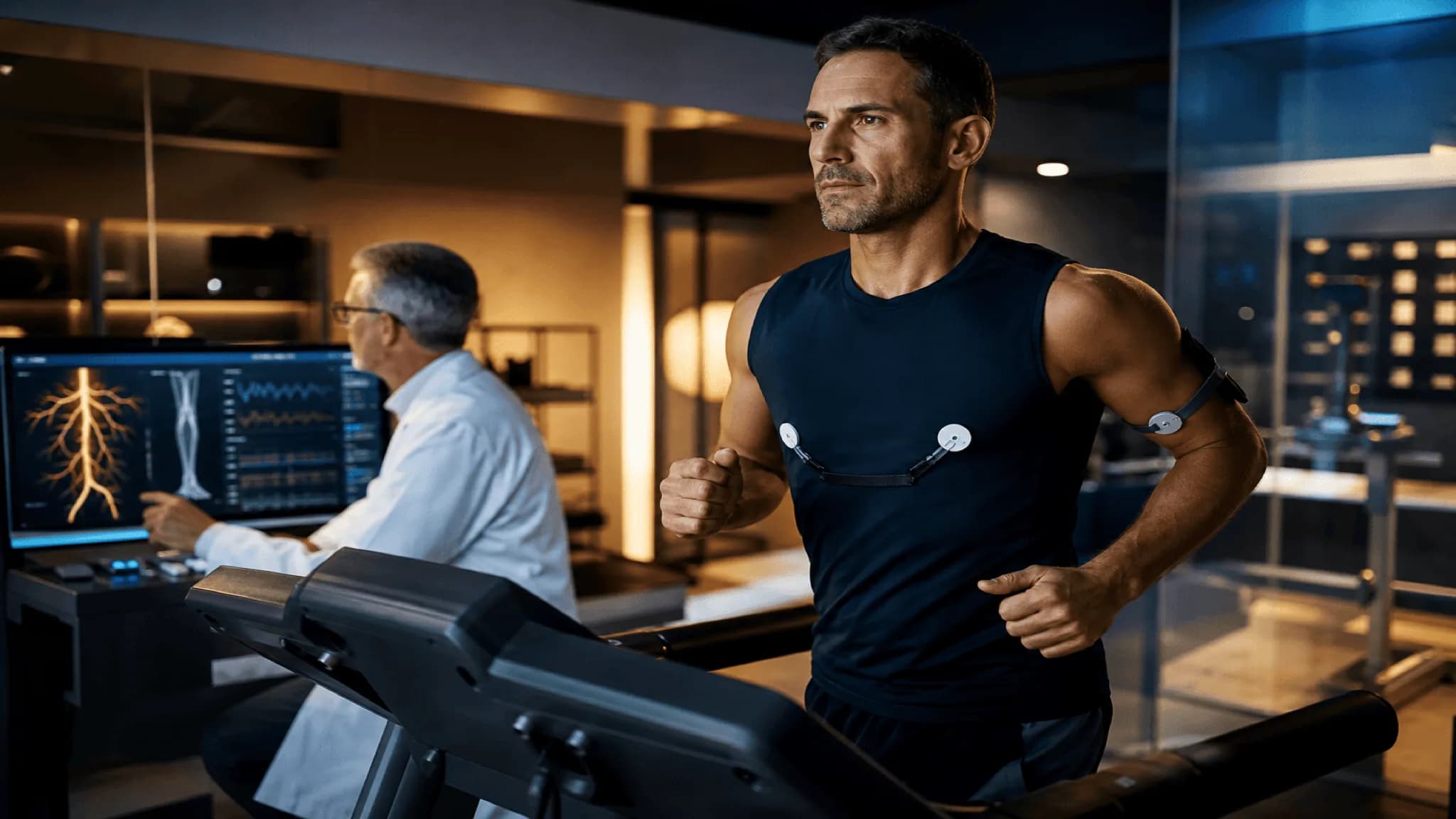

Cardio fitness and erectile dysfunction are closely connected because penile erection is a vascular event. Erections require coordinated nerve signaling, relaxation of cavernosal smooth muscle, adequate arterial inflow, venous trapping, and endothelial release of nitric oxide. When aerobic capacity declines, it often reflects a broader cardiometabolic environment in which endothelial function, blood pressure, insulin sensitivity, sleep quality, inflammation, and vascular resilience are under strain. For many men, erectile symptoms are therefore not an isolated genital problem. They may be an early, measurable sign that the vascular system is losing efficiency.
The clinical implication is practical rather than alarmist. Erectile dysfunction does not automatically mean a man has cardiovascular disease, and exercise is not a stand-alone cure. But the evidence increasingly supports viewing erectile function as part of a cardiometabolic assessment. A man with new or progressive ED should consider blood pressure, glucose metabolism, waist circumference, tobacco exposure, sleep apnea risk, alcohol intake, mood, medication effects, and fitness level alongside any discussion of prescription therapy. This broader framework helps explain why aerobic exercise has produced meaningful improvements in erectile function across randomized trials.
Why Cardio Fitness and Erectile Dysfunction Share Vascular Pathways
Penile arteries are small caliber vessels, and the erectile response depends on rapid changes in vascular tone. Sexual stimulation activates parasympathetic signaling and nitric oxide release, which increases cyclic guanosine monophosphate in smooth muscle cells. This lowers intracellular calcium, relaxes cavernosal tissue, and allows increased blood flow into the corpora cavernosa. Phosphodiesterase type 5 then breaks down cyclic guanosine monophosphate, which is why PDE5 inhibitors can support erection physiology in appropriately screened men.
Aerobic fitness influences this pathway upstream. Regular cardiorespiratory exercise improves endothelial nitric oxide bioavailability, reduces arterial stiffness, supports insulin sensitivity, lowers resting blood pressure in many populations, and may reduce chronic low-grade inflammation. These effects matter because endothelial dysfunction can blunt the nitric oxide signal required for normal erectile response. In men with metabolic syndrome, hypertension, obesity, diabetes, or smoking exposure, endothelial impairment and oxidative stress are common mechanisms linking systemic vascular disease with ED.
This does not mean every case of ED is vascular. Psychological stress, depression, performance anxiety, pelvic surgery, neurologic disease, endocrine disorders, medication adverse effects, and relationship factors can all contribute. However, vascular mechanisms are common enough that cardio fitness deserves attention in routine ED evaluation. The same clinical questions used to assess cardiovascular risk often illuminate erectile symptoms: Can the patient climb stairs without limitation? Has waist circumference changed? Is sleep restorative? Are blood pressure and A1c controlled? Is tobacco or heavy alcohol use present?
What Randomized Trials Suggest About Exercise
The strongest evidence for exercise in ED comes from randomized trials and meta-analyses using validated International Index of Erectile Function measures. A 2023 systematic review and meta-analysis in The Journal of Sexual Medicine evaluated 11 randomized controlled trials involving 1,147 men. Aerobic exercise improved IIEF erectile-function scores by a mean of 2.8 points compared with control groups. The effect appeared larger in men with more severe baseline ED, with estimated improvements of 2.3, 3.3, and 4.9 points across mild, moderate, and severe groups, respectively.
A separate 2024 systematic review and meta-analysis in Andrology focused on adult men with ED who were not receiving PDE5 inhibitors. It found a significant overall exercise effect, with aerobic training alone showing a particularly favorable subgroup signal. Earlier randomized and observational work also supports a vascular explanation. In a clinical study of middle-aged men with arterial ED, a structured aerobic physical activity protocol improved erectile scores and penile Doppler measures after three months, suggesting that changes in endothelial biology may translate into measurable sexual-function outcomes.
The magnitude of improvement should be interpreted carefully. A few points on an erectile-function scale may be clinically meaningful for some men and insufficient for others. Exercise trials vary by baseline health, training intensity, duration, adherence, comorbidities, medication use, and outcome measurement. Still, the consistency of benefit across studies makes aerobic activity a reasonable, low-risk component of ED management when a clinician has cleared the patient for exercise.
How Much Exercise Is Clinically Plausible?
Most ED-focused exercise studies use structured aerobic activity rather than vague advice to "move more." The practical target is often similar to general cardiovascular recommendations: at least 150 minutes per week of moderate-intensity aerobic activity, or 75 minutes per week of vigorous activity, with gradual progression based on baseline fitness and medical risk. Men who are sedentary, have chest pain, uncontrolled hypertension, known cardiovascular disease, or symptoms with exertion should seek medical guidance before starting a vigorous program.
For erectile function, consistency appears more important than novelty. Brisk walking, cycling, swimming, incline treadmill work, rowing, and low-impact intervals can all be useful if they are performed regularly and at an intensity that raises heart rate. Moderate intensity usually means the man can speak in short sentences but not sing. Vigorous intensity usually means conversation becomes difficult. Resistance training has cardiometabolic benefits and should not be ignored, but the ED-specific trial signal is strongest for aerobic training.
A useful clinical approach is to build from the current baseline rather than prescribe an idealized plan. A man doing no exercise may begin with 10 to 15 minutes of brisk walking most days, then progress toward 30 to 45 minutes. A man already training can monitor whether sessions are frequent enough to improve aerobic capacity, not merely maintain it. Sleep, recovery, and musculoskeletal tolerance matter; an exercise plan that causes pain or exhaustion is less likely to be sustained.
Risk Factors That Modify the Erectile Response
Exercise works best when other modifiable contributors are addressed. A 2024 Mendelian randomization study in Journal of Advanced Research evaluated a wide range of risk factors and supported causal roles for obesity-related traits, type 2 diabetes, cigarette consumption, hypertension, coronary heart disease, sleep-related breathing problems, depression, and alcohol consumption in ED risk. These findings do not prove that changing each factor will fully reverse ED in an individual patient, but they reinforce the point that erectile function is embedded in whole-body physiology.
Blood pressure is especially relevant. Hypertension can damage vascular endothelium and increase arterial stiffness, while some antihypertensive medications may affect sexual function. Diabetes can impair endothelial signaling, autonomic nerve function, and smooth-muscle responsiveness. Obesity and central adiposity are associated with inflammation, insulin resistance, lower testosterone in some men, and reduced exercise capacity. Tobacco exposure directly injures vascular tissue and reduces nitric oxide availability.
Sleep also deserves more attention than it often receives. Insomnia, snoring, and obstructive sleep apnea are associated with ED risk, and poor sleep can worsen testosterone rhythms, sympathetic tone, mood, and cardiometabolic health. Alcohol has a dose-dependent relationship with sexual function: some men notice transient erectile impairment after heavier intake, while chronic heavy use can affect hormones, nerves, liver function, mood, and vascular health. A good ED workup should therefore include not only a prescription discussion but also a clear inventory of these factors.
Where Prescription Therapy Fits
Lifestyle improvement and prescription therapy are not competing models. They address different parts of the same physiology. Aerobic conditioning may improve endothelial function and vascular health over weeks to months. PDE5 inhibitors act more acutely on the nitric oxide-cGMP pathway by reducing the breakdown of cyclic guanosine monophosphate. In men who are appropriate candidates, this can support erectile response while longer-term cardiometabolic work is underway.
Medication choice should be individualized. Tadalafil has a longer half-life than sildenafil or vardenafil, which is why it is used both as an on-demand medication and, at lower doses, in daily regimens. Vardenafil and sildenafil are shorter acting and may be preferred in certain contexts. Contraindications matter. Men taking nitrates should not use PDE5 inhibitors, and men with significant cardiovascular symptoms need medical evaluation before sexual activity or ED medication. Drug interactions, alpha-blocker use, blood pressure, prior adverse effects, and treatment goals should all be reviewed by a clinician.
The most clinically coherent plan is often layered: assess cardiovascular risk, address modifiable drivers, select medication only when appropriate, and track response. If a man begins exercising, loses weight, improves sleep, or reduces alcohol intake, medication needs may change. If medication response is poor, the next step is not simply higher dosing. It may be a search for unaddressed vascular disease, testosterone deficiency, diabetes, medication effects, pelvic factors, or psychogenic contributors.
Conclusion
The evidence linking cardio fitness and erectile dysfunction is strongest when ED is understood as a vascular and cardiometabolic signal. Aerobic exercise may support erectile function by improving endothelial health, nitric oxide biology, blood pressure, insulin sensitivity, and overall cardiovascular reserve. Clinical trials suggest measurable improvements in erectile-function scores, particularly with consistent aerobic training. At the same time, ED is multifactorial, and exercise should be part of a broader evaluation that includes cardiovascular risk, sleep, mood, metabolic health, medication review, and physician-guided treatment options.
If you're exploring clinically-formulated options, OnyxMD offers physician-supervised treatment plans, including EPIQ CHEWS, starting with a free online assessment at questionnaire.getonyxmd.com. More evidence-focused articles are available on the /blog.
These statements have not been evaluated by the FDA. This content is for informational purposes only and does not constitute medical advice.
References
- Khera M, Bhattacharyya S, Miller LE. Effect of aerobic exercise on erectile function: systematic review and meta-analysis of randomized controlled trials. The Journal of Sexual Medicine. 2023;20(12):1369-1375. doi:10.1093/jsxmed/qdad130
- Liu J, Wu Y, Zhou W, Chen L, Wang Y, Zhang X. Effect of different physical activities on erectile dysfunction in adult men not receiving phosphodiesterase-5 inhibitors therapy: A systematic review and meta-analysis. Andrology. 2024;12(8):1632-1641. doi:10.1111/andr.13682
- Maio G, Saraeb S, Marchiori A. Aerobic physical activity improves endothelial function in the middle-aged patients with erectile dysfunction. The Aging Male. 2011;14(4):265-272. doi:10.3109/13685538.2010.544344
- Xiong Y, Zhang F, Zhang Y, Wang W, Ran Y, Wu C, Zhu S, Qin F, Yuan J. Insights into modifiable risk factors of erectile dysfunction, a wide-angled Mendelian Randomization study. Journal of Advanced Research. 2024;58:149-161. doi:10.1016/j.jare.2023.05.008
Medical Disclaimer: The information provided on this website is for educational and informational purposes only and is not intended as medical advice. OnyxMD services should not be used to diagnose, treat, cure, or prevent any disease or medical condition. Always consult with a qualified healthcare provider before beginning any supplement regimen or health program.
FDA Disclaimer: These statements have not been evaluated by the Food and Drug Administration. This product is not intended to diagnose, treat, cure, or prevent any disease.
Individual Results: Results may vary. The experiences and testimonials presented on this website are individual results that may not be typical. Your experience may be different.
Telehealth Services: OnyxMD provides telehealth services in 47 states (excluding AK, MS, NJ) through licensed healthcare providers via our partner Beluga Health, P.A. Services are subject to clinical evaluation and may not be appropriate for all individuals. Prescriptions fulfilled by Strive Pharmacy LLC (License #99-9817) and EPIQ SCRIPTS LLC.